
Are Home Gyms Worth It? (Costs, Benefits & ROI)
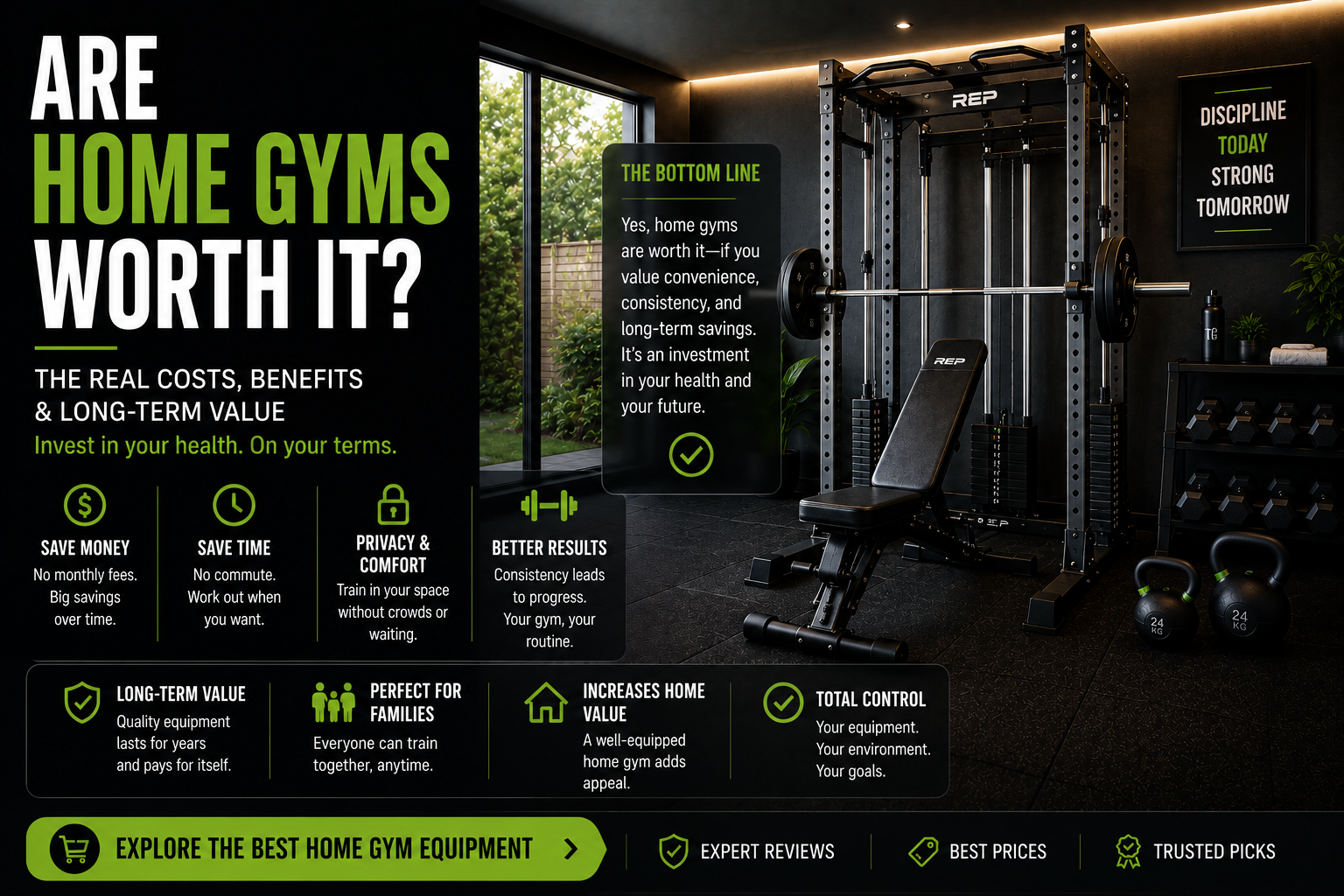
A home gym is worth the investment when it changes behavior: it makes training more frequent, reduces time lost to travel and waiting, and remains useful for several years. The equipment alone does not create a return. The return comes from repeated workouts, avoided membership and travel costs, shared household use, and retained resale value.
The strongest financial case is usually not a luxury room built immediately. It is a staged setup that begins with versatile equipment, proves consistent use, and expands only when the next purchase solves a documented limitation.
Our Editorial Verdict
A home gym is usually worth it for consistent users with suitable space, especially households replacing multiple memberships. Start modestly, calculate the complete cost, and expand after the equipment proves its value.
The Best Direction for Each Type of Buyer
These are equipment categories and system types, not a claim that one machine is perfect for every room or training style.
Multiple Regular Users
One equipment base can replace several recurring memberships and travel routines.
Check Current OptionsBusy or Irregular Schedules
Training becomes possible in short windows because preparation and travel are minimal.
Check Current OptionsPhased Compact Setup
Tests consistency before committing to a rack, trainer, or premium all-in-one system.
Check Current OptionsUncertain or Rare Use
Unused equipment consumes capital and space without producing training value.
Check Current OptionsImportant Differences at a Glance
Use the table as a screening tool, then verify dimensions, capacity, included accessories, and installation requirements on the current product page.
| Setup Level | Illustrative Investment | What It Supports | ROI Profile |
|---|---|---|---|
| Starter setup | $300–$1,000 | Dumbbells, bench, bands, flooring | Low-risk proof of use |
| Intermediate strength setup | $1,500–$4,000 | Rack, bar, plates, bench, storage | Strong long-term utility |
| Premium cable/all-in-one setup | $4,000–$10,000+ | Rack, stacks, guided bar, attachments | High convenience, longer break-even |
| Commercial membership | Recurring monthly/annual | Shared broad equipment | Low upfront commitment |
How to Make the Right Decision
This section focuses on the specifications and ownership details that most often separate a satisfying home-gym purchase from an expensive compromise.
1. Use a Complete Break-Even Formula
Add equipment, tax, delivery, assembly, flooring, storage, repairs, financing, and room upgrades. Subtract expected resale value. Compare the result with avoided membership fees, annual charges, transportation, parking, and the value you assign to time saved. Divide the net home-gym cost by annual avoided cost for a rough break-even estimate.
2. Usage Is the Dominant Variable
A $2,500 setup used four days per week can provide better value than a $600 setup used twice per month. Estimate workouts per year and calculate cost per workout. Recalculate after six months using actual sessions rather than optimistic assumptions.
3. Multiple Users Change the Economics
Two adults replacing separate memberships can reach break-even much faster than one occasional user. Teenagers, visiting family, and shared cardio equipment can add value, but only regular expected use should be included in the calculation.
4. Time Savings Have a Real Opportunity Value
Home training can remove driving, parking, locker-room time, and equipment queues. Even when the dollar break-even takes years, recovering several hours per month may justify the purchase for parents, shift workers, remote workers, and business owners.
5. Equipment Retains Some Value, but Not Equally
Standard plates, quality racks, benches, and popular adjustable dumbbells are often easier to resell than enormous proprietary machines. Condition, brand, local demand, disassembly difficulty, and freight requirements affect recovery value.
6. Space Has a Cost
A spare bedroom, finished basement, or garage bay has alternative uses. A home gym that prevents parking, storage, office work, or guest accommodation carries an opportunity cost. Compact and folding equipment reduces this penalty.
7. Start With a 90-Day Proof Period
Use a modest setup for approximately three months. Track workouts, missed sessions, exercises you cannot perform, and resistance limitations. Then buy the next item that addresses the most frequent constraint.
Buy, Wait, or Choose Another Setup?
Likely worth it when…
You already train consistently, have appropriate space, and expect several years of use.
Proceed carefully when…
Your schedule, residence, or preferred training style may change soon.
Probably not worth it when…
You depend on classes, coaching, pools, courts, or many specialty machines and rarely train alone.
Common Buying Mistakes
Before You Place an Order
Confirm the complete operating footprint, ceiling height, delivery path, floor condition, assembly needs, resistance behavior, included accessories, and future expansion compatibility. Save a screenshot or PDF of the current specifications because products and included packages can change.
Related TrainingGearGuide Articles
Are Home Gyms Worth It? (Costs, Benefits & ROI) FAQ
How long does a home gym take to pay for itself?
A compact setup may break even relatively quickly, while a premium system may require several years. Usage, number of users, dues avoided, and resale value determine the result.
Does equipment hold its value?
Some quality racks, plates, dumbbells, and benches retain meaningful value, but condition, brand, location, and transport difficulty matter.
What is the biggest hidden cost?
Common hidden costs include flooring, delivery, assembly, climate control, storage, electrical work, and the opportunity cost of the room.
Who should not build a home gym?
People who strongly depend on classes, coaching, pools, courts, specialty machines, or social accountability may receive better value from a membership.
What is the safest way to begin?
Start with versatile equipment and a modest budget, then expand after several months of consistent use.
Editorial note: Product specifications, included accessories, warranties, and prices may change. Verify current details with the manufacturer or retailer before purchasing.
Affiliate disclosure: TrainingGearGuide may earn a commission from qualifying purchases made through links on this page, at no additional cost to you.
Build the Gym That Removes Your Biggest Training Barrier
The best equipment is not the system with the longest feature list. It is the setup that fits your room, supports progressive training, and remains easy enough to use consistently.